Saturday, August 18, 2012

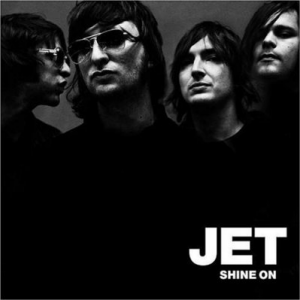
If you like Jet, thank The Who


It is almost passe to declare The Who one of the greatest rock bands of all time. But their blend of pitch-perfect pop hooks and blistering, no-holding-back, balls-to-the-wall rock and roll inspired an entirely new genre of music (hard rock/heavy metal) and their influence can be felt across almost every genre. Ask any musician to name the quintessential rock star, and they will likely mention Pete Townshend.

But some modern bands are more careful students of The Who than others, and in my opinion, no one apes The Who better than Jet.

Take, for example, their ubiquitous 2003 single, "Are You Gonna Be My Girl?":


Despite the fact that it was extremely overplayed when it was first released, this song more than holds up. That infectious, complex bass line. The rollicking, fuzzy guitars. The raw, impossible-to-resist, get-up-out-of-your-seat-and-dance ENERGY of this song. (It is no wonder Apple chose this song for the first and best of their iconic "dancing silhouettes" ads.)

Musically, it is a page straight out of The Who's playbook. Listen to what is perhaps The Who's most famous song, "My Generation" from 1965:


Hear it? To quote Allmusic: "[This song is] a good nominee for rock's most explosive expression of adolescent rebellion. Guitar feedback, crashing drums, power chords..." All hallmarks you'll hear on an equally rebellious, explosive song by Jet almost 40 years later.

So if you like Jet, remember... thank The Who.

Saturday, June 30, 2012

If you like Carly Rae Jepsen, thank Annie Lennox

This is too easy, but I can't stop listening to this mashup, so I had to post it. Big tip of the hat to Vampire Weekend's Rostam Batmanglij for spotting the similarities between the song of the summer, "Call Me Maybe," and Lennox's "Walking on Broken Glass:"

Wednesday, June 27, 2012

If you like Fleet Foxes, thank Neil Young too

After reading my post, "If you like Fleet Foxes, thank Crosby, Stills & Nash," alert LTF reader Edley Naylor-Leyland pointed out that Fleet Foxes owe a musical debt to CSN partner Neil Young as well. To quote Naylor-Leyland, "Check out the similarities of Ohio (Young) and Mykonos (Fleet Foxes)- they use the exact same bit of Ohio at about 2min15secs."

So let's all take a listen. First, Neil Young's tragic anthem to the Kent State riot of 1970:


The sound is electric, minor-key heartbreak. But pay special attention to the vocal harmonies in the verse, especially "Gotta get down to it/ Soldiers are cutting us down."

Now listen to "Mykonos" by Fleet Foxes, paying special attention to the bridge around 2:15:


Well, I'll be damned. That is, in fact, the exact same vocal harmony and melody, especailly at "You go wherever you go today." So spot on that it sounds like an intentional homage to Kent State in my ear. Proving yet again that the indie rock so popular today takes great inspiration and sustenance from the classic rock that came before.

Great ear, Edley!

Saturday, June 02, 2012

If you like Colbie Caillat, thank Fleetwood Mac


Okay, admittedly this one is a little too easy. Colbie Caillat is, of course, the daughter of famed music producer Ken Caillat, who gave some of Fleetwood Mac's best albums (including Tusk, Mirage and multi-platinum-selling Rumours) their distinctive warm-California tone. So it should be no surprise that Colbie harnesses the same likeable, breezy melodies as Fleetwood Mac, and adopts their focus on intimate relationships combined with the appealingly maximalist production tone that defined that megagroup of 1970s folk-rock. According to Fleetwood Mac fansite fleetwoodmac.net:

[Ken Caillat's]  knowledge about how to get sounds recorded made Caillat an integral part of the team behind the mixing desk during those recordings. Lindsey Buckingham remembers the recording of "Go Your Own Way": "I really think Ken Caillat did a great job of getting the sound that solo needed. It defined an approach for years to come." 

Buckingham was right in more ways than he intended: Caillat's distinctive production is a very successful approach that he is still putting to good use in the 2000s by producing all three of daughter Colbie's albums to date. Perhaps nowhere is his method more recognizable than in her song, "Falling for You:"


There are the warm, jangly, multiple-tracked acoustic guitars. There are the soft vocal harmonies. It's a pleasant, familiar, appealingly vintage sound. But then, when you get toward the end of the song, he drops in a signature riff, the one that sounds like birds flitting around the corners of the sonic landscape. You hear it after the bridge, when the vocals sing, "I can't stop thinking 'bout it, I want you all around me, and now I just can't hide it." Hear the subtle, dancing riff that's laid down over that? Does it sound familiar?

That's because Caillat and Buckingham first used it on Fleetwood Mac's Stevie Nicks-penned "Gypsy" from 1983's Mirage:


Still the warm, jangly tone. An even richer spectrum of background harmonies. And at the very end of the song, you'll hear a synthesizer riff that should sound very familiar.

So remember, if you like Colbie Caillat, thank Fleetwood Mac, and their consistently successful producer Ken Caillat.


Tuesday, April 17, 2012

If you like Rufus Wainwright, thank Judee Sill

Back in the halcyon musical days of 2001 (that same year would see the release of Ryan Adams' Gold, Wilco's Yankee Hotel Foxtrot, and Cake's Comfort Eagle), Rufus Wainwright released Poses, an album that is so revered among critics, fans and fellow musicians that it established Wainwright as a top artist of his generation, a footing he still maintains to this day. Listen first to the title track from that album, a gorgeously symphonic, polyphonic elegy that blends elements of classical music, Broadway and folk revival:


It's tempting to believe that a sound as distinctive as Wainwright's, blending so many traditional influences in his creative way, has no predecessor. It's tempting to want to believe he has forged a unique sound. But in music, there is rarely such a thing, and in this case, Wainwright has taken a page directly from the playbook of folk-era innovator Judee Sill.

Who, you ask? Judee Sill's story is tragic and now mostly forgotten, which is unfortunate, because the music she wrote during her brief, troubled life has gone on to influence countless musicians -- Shawn Colvin, Joanna Newsom and, most relevant here, Rufus Wainwright.

As a point of comparison, listen to Sill's symphonic, elegiac ballad "The Kiss" from her 1973 album Heart Food:


To quote Alex Stimmel's excellent biography of Sill on allmusic.com, "Lushly orchestrated, the album featured Sill's voice in multiple overdubs, often in a four-part chorale or fugue." This could as easily describe Poses, which sets itself apart with these exact same hallmarks.

So, if you like Rufus Wainwright, thank Judee Sill, may she rest in peace.

Tuesday, April 10, 2012

If you like Justin Townes Earle, thank Dr. John


Maybe it's the horns. Since his last album, Justin Townes Earle (Steve Earle's son, for those keeping score) has mellowed and, well, funkified. In an eclectic-influences-from-New-Orleans kind of way.

Listen to "Baby's Got a Bad Idea," from last month's Nothing's Gonna Change the Way You Feel About Me Now:


If you're familiar with Dr. John, the godfather of the unique pastiche of blues, funk, R&B and second-line brass marching band that he dubs "voodoo music," then no further explanation is needed. Earle's track is a study at the feet of the master.

But if you're less familiar with the musical institution that is Dr. John, listen to this 2009 live version of one of his best-known tracks, "Iko Iko":


(Or better yet, get on the Spotify and listen to the original album version of that song, technically a cover of an old 1950s Bo Didley-style blues, one that he has all but co-opted and made his own after 40 years of playing it.)

Hear it? The horns, of course. The adventurous, improvised stride piano. The funky rhythm. The bluesy growl of his voice. All a direct inspiration for the Justin Townes Earle track.

Dr. John has a new album out this week, too, produced by Dan Auerbach of the Black Keys, (which I mention only to demonstrate that the hipsters appreciate this legend as much as the legends do.) There's a nice little in-studio preview here.

But in the meantime, remember: if you like the new Justin Townes Earle, thank Dr. John.

Friday, March 09, 2012

If you like Fun., thank ELO


So, you've heard this hit single from the indie-pop band Fun. I promise you have. It's everywhere, even in a Chevy superbowl ad. It's called "We are Young" and it features Janelle Monae, a revered R&B artist in her own right. It combines Fun.'s (yes, the period is part of the band name) clever pop songwriting prowess with one of hip-hop's top producers to create a sound similar to that of the smash Alicia Keys/Jay-Z collab, "Empire State of Mind," but more theatrical, more intricately melodic. (For more on how this sound came about, check out this feature from the New York Times.)


Hear the right-hand piano chords keeping time with quarter notes on the chorus? Hear those dramatic tempo changes? Hear the complex production, the multi-tracked vocals, the choir? The way the song ends, on a slower, quieter note than anything before it? If this sounds familiar, it's because all of these elements are an homage to 70s prog-rock pioneers Electric Light Orchestra, or ELO.

British band ELO mostly flies under the radar today, only occasionally getting airplay on classic rock stations. But in the 1970s, they were HUGE. Their 1977 double-LP Out of the Blue went platinum, meaning it sold one million copies. They had numerous top-10 singles, all of which combined their symphonic-yet-experimental arrangements and solid pop songwriting to create a sound that defied categorization and predicted by almost a decade the lush production that would become so prevalent in the 1980s (when the new portability of the Moog synthesizer would revolutionize the sound of pop music.) Out of the Blue also produced the hit "Mr. Blue Sky," (itself the soundtrack for a car commercial from the early 2000s) which seems to serve as the source material for "We Are Young."


Hear it? The way the song opens with piano chords keeping a steady marching beat, and how the synthesizer picks that up again during the chorus. The way the tempo shifts. The way the instrumentation drops out significantly during the chorus, to emphasize the multi-tracked vocals. There's a choir. The song even ends on a slow, quiet note.

So remember, if you like Fun., thank ELO.